
When to Book Car Brake Repair in Epping
A brake problem rarely arrives at a convenient time. It may start as a faint squeal while dropping the kids at school, a steering wheel vibration on the way to work, or a brake pedal that suddenly feels softer than usual. When you need car brake repair Epping drivers can rely on, acting early is one of the simplest ways to protect your family, your vehicle and your budget.
Your brakes are designed to wear over time, but they should always feel predictable. If stopping takes more effort, the car pulls to one side, or a warning light appears, it is time for a professional inspection. Small issues can become expensive repairs when they are left too long, particularly when worn pads begin damaging brake discs or a fluid leak affects braking performance.
The signs your brakes need attention
Some brake wear is easy to notice. Others are subtle, which is why regular servicing matters even when your vehicle seems to be driving normally. The key is to pay attention to changes rather than waiting for complete brake failure.
A high-pitched squeal is one of the most common warnings. Many brake pads have wear indicators designed to make a noise when the pad material is getting low. This does not always mean the brakes are dangerous that day, but it does mean you should arrange an inspection soon.
Grinding or scraping is more urgent. It can mean the brake pad material has worn away and metal is contacting the brake disc. Continuing to drive may score or warp the disc, turning a pad replacement into a larger repair. You may also notice a shudder through the pedal or steering wheel when braking, particularly from highway speeds. This can point to uneven disc wear, heat damage or another issue that needs diagnosis.
Other warning signs include a spongy pedal, a pedal that travels unusually close to the floor, a vehicle that pulls left or right under brakes, or a burning smell after normal driving. A brake warning light should never be ignored either. It may relate to the braking system, low brake fluid or, in some vehicles, the anti-lock braking system.
If braking feels suddenly weak, the pedal sinks, or you suspect a fluid leak, do not keep driving to see if it improves. Pull over safely and arrange help. Brakes are not a component to take chances with.
What causes brake problems?
For most vehicles, normal wear is the main reason for brake repairs. Every stop creates friction between the pads and discs. City commuting, school runs, traffic around Sydney and frequent stop-start driving can wear pads sooner than steady motorway travel. A heavy vehicle, towing, carrying work equipment or regularly driving through hilly areas can also increase wear.
Brake discs do not necessarily need replacing every time pads are changed. It depends on their thickness, condition and whether they are still within the manufacturer’s specifications. If discs are heavily scored, warped or too thin, replacement is usually the safer option. Fitting new pads to badly worn discs can lead to noise, vibration and reduced performance.
Brake fluid is another important part of the system. It transfers force from the pedal to the brakes, and it can absorb moisture over time. Old or contaminated fluid may lower braking performance, especially under heavy braking, and can contribute to corrosion inside the system. A qualified mechanic can advise whether a brake fluid flush is due based on your vehicle’s service schedule and the fluid’s condition.
Not every sound near a wheel is a brake fault. A stone caught near a disc, a worn wheel bearing, damaged suspension components or a tyre issue may create similar symptoms. This is why proper diagnosis is more useful than guessing or replacing parts unnecessarily.
What a proper brake inspection involves
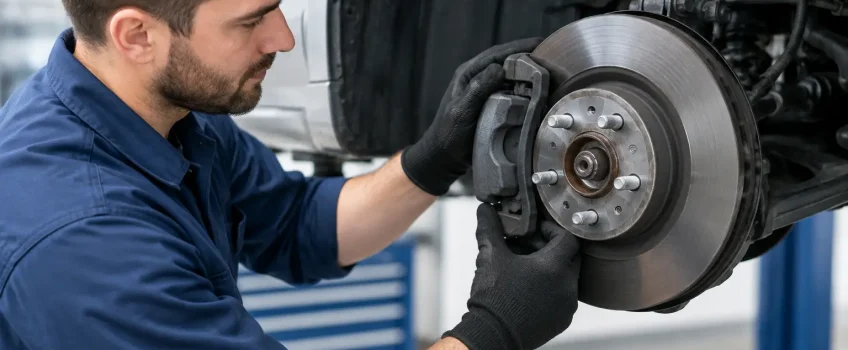
A thorough brake check is about more than looking through the wheel spokes. The wheels may need to come off so the mechanic can assess pad thickness, disc condition, callipers, hoses, hardware and any signs of leaks or uneven wear.
The brake system should also be checked in the context of how the car is behaving. If a vehicle pulls when braking, the cause could be a sticking calliper, uneven pads, tyre pressures, wheel alignment or suspension wear. If the brake pedal feels different, the system may need checking for fluid condition, air in the lines or a fault with another component.
At Epping Auto Service, the aim is to explain what has been found in plain English and recommend work based on safety and condition. You should understand whether the repair is urgent, what parts need replacing, and whether related work such as discs, fluid or tyres should be considered at the same time.
Car brake repair in Epping: repair now or monitor?
This depends on the fault. A technician may identify brake pads that are worn but still safe for a short period, allowing you to plan the repair around your schedule. However, that advice depends on the remaining pad thickness, your driving habits and whether the discs are in good condition. A commuter travelling daily on busy roads has different braking demands from a second car used only on weekends.
Some issues should be repaired without delay. These include grinding brakes, a warning light combined with poor braking, fluid leaks, heavily worn pads, damaged discs or a sticking calliper. A sticking calliper can cause the vehicle to pull, create excessive heat and wear one pad much faster than the other.
It can be tempting to replace only the visibly worn part to keep costs down. Sometimes that is appropriate. But where components work as a pair across an axle, replacing both sides is generally necessary for balanced braking. The right approach is not the cheapest possible repair or the most extensive repair by default. It is the repair that restores safe, reliable braking according to your vehicle’s needs.
How to help your brakes last longer
Brake pads and discs are wear items, so no driving habit will make them last forever. Still, smoother driving can reduce unnecessary wear. Leave more space between your vehicle and the one ahead, ease off the accelerator earlier and avoid late, hard braking where traffic conditions allow.
Keep up with scheduled servicing too. During a service, brake components can be inspected before a minor wear issue becomes a disruption. Tyres, wheel alignment and suspension also affect how confidently a car stops, so they should not be treated as completely separate concerns.
If you have recently driven through deep water, heard a new noise after wheel or tyre work, or had body repairs following an accident, it is sensible to have the brakes checked if anything feels different. Even a mild vibration or pull is worth raising when you book in.
Choosing a local workshop for brake repairs
Brake work should be carried out by licensed, experienced mechanics using quality parts suited to the vehicle. Clear communication matters just as much. You need to know what is being repaired, why it is needed and what the expected cost involves before the work proceeds.
A local full-service workshop can be especially convenient because brake concerns are often connected with routine servicing, tyres, suspension, steering or roadworthiness requirements. Addressing the real cause in one visit can save time and prevent repeat bookings for a problem that was only partly resolved.
When your car gives you an early warning, listen to it. Booking a brake inspection while the symptom is small can help keep every trip – from the morning commute to a family weekend away – calm, safe and dependable.