
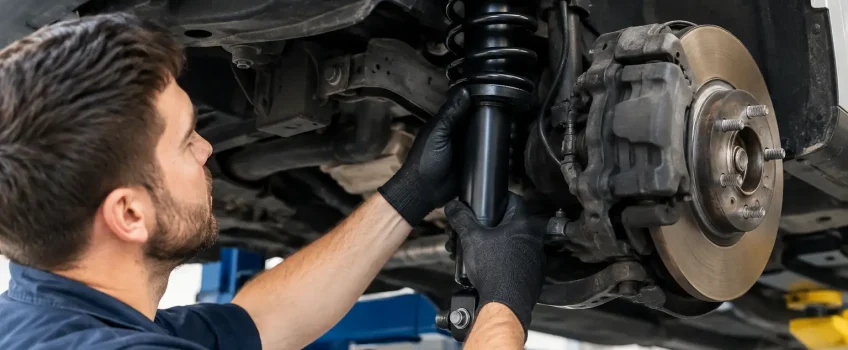
Shock Absorber Replacement Epping – Know the Signs
A car that bounces over speed humps, leans through roundabouts or feels unsettled on the M2 is not just less comfortable to drive. It may be telling you that shock absorber replacement Epping is due. Shock absorbers play a major part in keeping your tyres in contact with the road, so worn units can affect braking, steering and overall control long before a complete failure.
For local commuters, families and fleet drivers, suspension faults are easy to put off. The vehicle might still start, steer and get you to work. But a small change in the way it rides can become a safety issue, particularly in wet weather, during emergency braking or when carrying passengers and a full boot. Knowing what to look for helps you arrange repairs before the problem becomes more expensive.
What Shock Absorbers Do for Your Car
Despite the name, shock absorbers do more than soften bumps. Springs support the vehicle’s weight and allow the wheels to move over uneven roads. Shock absorbers control that spring movement, stopping the vehicle from continuing to bounce after a bump and helping the tyres maintain a firm, predictable contact patch with the road.
When the shocks are working properly, your car feels composed. It settles quickly after a pothole, remains more stable when cornering and responds consistently when you brake. This matters on suburban streets as much as it does at motorway speeds. A sudden stop near a school crossing or a tight turn into a car park both rely on the suspension doing its job.
Modern vehicles may use conventional shock absorbers, struts or more specialised suspension systems. A strut is a structural suspension component that combines damping with other functions, so its replacement process can differ from a standard shock absorber. The right repair depends on the vehicle, its mileage, its condition and the way it is used.
Signs You May Need Shock Absorber Replacement in Epping
Wear usually develops gradually, which is why many drivers adapt to a poorer ride without noticing it straight away. Pay attention to changes that are new or getting worse, rather than judging your vehicle against someone else’s.
One of the clearest signs is excessive bouncing. If the car continues to rise and fall after going over a speed hump or rough section of road, the shock absorbers may no longer be controlling the springs effectively. A feeling of pitching forwards under brakes or squatting at the rear when accelerating can point to the same issue.
Body roll is another warning sign. Some lean in corners is normal, especially in taller vehicles, but a car that feels unusually loose, wallowy or difficult to place through a bend should be checked. You may also notice the steering needs more correction on an uneven road or in crosswinds.
Uneven tyre wear can be connected to worn shocks, although tyres, wheel alignment and other suspension components can also be responsible. Cupped or scalloped wear, where the tyre surface develops alternating high and low patches, is worth inspecting promptly. It can make the drive noisy and reduce tyre life.
Other symptoms include knocking noises over bumps, fluid leaks around a shock absorber, a vehicle sitting lower at one corner or a longer, less confident feeling under braking. None of these signs confirms the cause on its own. A professional inspection is the sensible next step, because worn bushes, ball joints, sway bar links, springs and tyres can create similar symptoms.
Why Leaking Shocks Should Not Be Ignored
Most conventional shock absorbers contain hydraulic fluid. A light trace of moisture or road grime does not always mean immediate replacement, but a visible oil leak may indicate that the internal seal has failed. As fluid escapes, the shock’s ability to control movement is reduced.
A leaking component is not likely to improve with further driving. Having it assessed early can help avoid extra wear on tyres and other suspension parts, while restoring the stable handling your car should provide.
What Happens During a Suspension Inspection
A proper assessment starts with your description of the problem. Let the mechanic know when you notice it: under brakes, on rough roads, while turning, with passengers aboard or at higher speeds. Those details can make diagnosis faster and more accurate.
The vehicle is then checked for leaks, damaged mounts, worn rubber bushes, broken springs, loose components and tyre condition. The technician may also inspect wheel alignment and look for evidence of uneven tyre wear. Road testing, where appropriate, helps confirm whether the vehicle’s handling matches the condition found in the workshop.
This approach matters because replacing shocks without addressing a damaged mount or worn control-arm bush can leave the vehicle feeling less than right. Equally, not every rough ride calls for new shock absorbers. Honest diagnosis means repairing what is needed and explaining why.
Replacing Shocks: What Is Usually Recommended
Shock absorbers are generally replaced in pairs across the same axle. Replacing only one front or one rear unit can create an imbalance in handling and braking response, as the new component will control movement differently from the worn one on the other side.
Depending on the vehicle, the job may also involve replacing related parts such as top mounts, bump stops, dust boots or worn sway bar links. These components are not automatically required every time, but fitting new shocks alongside badly worn supporting parts can be false economy. Your mechanic should explain the condition of each item and give you clear options before work begins.
After front strut replacement or suspension work that alters alignment angles, a wheel alignment may be recommended. Alignment does not repair worn shocks, but it ensures the wheels point in the correct direction and can protect your tyres from premature wear. If your car has recently hit a pothole or kerb, it is particularly worthwhile to have both suspension and alignment checked.
The Safety and Cost Benefits of Timely Repairs
Putting off suspension repairs may seem like a way to save money in the short term, especially if the vehicle remains driveable. In practice, worn shocks can place extra demand on tyres, brakes and other suspension components. A poor ride can also make a daily commute tiring, as the driver works harder to keep the car settled and straight.
Fresh, correctly matched shock absorbers can improve stability, reduce excessive bounce and help the vehicle feel more controlled over Sydney’s patched roads, driveway entries and speed humps. The difference is often most noticeable when braking, cornering or driving with the family on board.
For work vehicles and fleets, staying ahead of suspension wear is also a practical maintenance decision. Reliable handling, better tyre life and fewer unexpected repair bookings help keep vehicles on the road. Service intervals and replacement timing vary, so inspections during routine servicing are more useful than relying on a single kilometre figure.
Choosing a Local Workshop for Shock Absorber Replacement Epping
Suspension work should be carried out by experienced, licensed mechanics using quality parts suited to your specific make and model. The lowest quote is not always the best value if it leaves out inspection, associated worn parts or alignment checks that the vehicle genuinely needs.
At Epping Auto Service, the team can inspect the full suspension system, explain the findings in plain English and carry out the required mechanical repairs in one local workshop. You will know what needs attention now, what can be monitored and how the work supports safer everyday driving.
If your car feels bouncy, unstable or less predictable than it used to, trust that feeling and arrange an inspection. Restoring a settled, controlled ride is one of the simplest ways to look after the people who travel with you every day.