
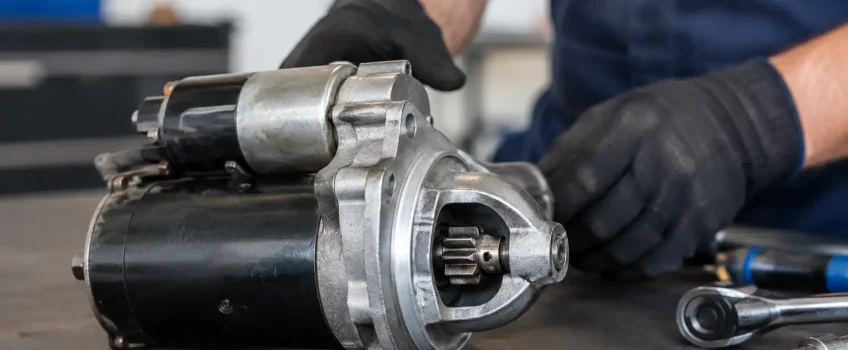
Starter Motor Repair Epping NSW Warning Signs
That single click when you turn the key can quickly turn a normal morning into a stressful one. If your vehicle will not crank, starter motor repair Epping NSW drivers need should begin with proper testing, not guesswork. A flat battery, loose battery terminal, alternator fault or ignition issue can all create similar symptoms, so an accurate diagnosis is the best way to avoid paying for parts you do not need.
Your starter motor has one simple but essential job: it uses power from the battery to turn the engine over so it can start. When it begins to fail, the signs are often intermittent at first. Acting early can help prevent an inconvenient breakdown at home, at work or away from Epping.
What the starter motor does when you start your car
When you turn the key or press the start button, the battery sends a large electrical current to the starter motor. A small component called the solenoid engages the starter with the engine’s flywheel or flexplate. The motor then cranks the engine until it fires and runs under its own power.
It is a demanding job. The starter must deliver a high burst of power, often in hot engine-bay conditions, while dealing with regular stop-start use. Over time, internal brushes, electrical contacts, bearings and the solenoid can wear. Corrosion on electrical connections and oil contamination can also affect performance.
Once the engine is running, the starter motor is no longer involved. That distinction matters because a car that starts but later loses electrical power may have an alternator or battery issue rather than a starter fault.
Starter motor repair Epping NSW drivers should not put off
A failing starter motor does not always stop working without warning. Many vehicles give their owners a few clues first, particularly after the engine has been driven and is hot. Paying attention to those changes gives you a better chance of booking a repair before the vehicle leaves you stranded.
Common warning signs include:
- A single click, repeated clicking or a whirring noise when you attempt to start the car.
- Slow or laboured cranking, even when the battery appears to be charged.
- An engine that starts normally on some occasions but refuses to crank at other times.
- Smoke, a burning smell or unusual heat around the starter area after repeated start attempts.
A clicking noise is not an automatic confirmation that the starter has failed. Rapid clicking is often associated with low battery voltage, while one firm click with no crank can point to the starter solenoid, motor or its wiring. The same symptom can have different causes depending on the vehicle, which is why a workshop test is worthwhile.
You may also notice that the dash lights come on as usual, but the engine will not turn over. That can be frustrating because it feels as though the battery must be fine. However, dashboard lights use far less power than a starter motor. A weak battery may still run accessories while lacking the current required to crank the engine.
Why accurate testing saves time and money
Replacing a starter motor without checking the charging and starting system can be an expensive guess. A qualified mechanic can test battery condition, battery terminals, earth connections, starter voltage supply and charging performance before recommending repairs.
This process helps identify whether the issue is a worn starter motor, poor electrical connection, weak battery, faulty alternator, ignition switch fault or a problem with the vehicle’s security system. On newer vehicles, the diagnosis may also include a scan for fault codes, especially where a push-button start system or electronic steering lock is involved.
Testing is particularly important if the vehicle has needed jump-starting recently. A jump-start may get you moving, but it does not explain why the battery went flat. The cause could be an ageing battery, charging fault, parasitic electrical drain or a starter motor that is drawing excessive current.
At Epping Auto Service, the focus is on explaining what has been found in plain English before work goes ahead. For busy commuters, families and fleet operators, the aim is to get to the cause of the no-start problem efficiently and provide practical repair options.
Repair or replacement: what is the right option?
Whether a starter can be repaired or should be replaced depends on its condition, the vehicle and the availability of suitable parts. In some cases, a starter can be reconditioned with replacement brushes, contacts or a solenoid. In others, fitting a quality replacement unit is the more reliable and cost-effective choice.
A repair may make sense where the fault is isolated to a serviceable component and the rest of the unit is in good condition. Replacement is often preferred when there is significant internal wear, damage to the motor housing, repeated intermittent failure or contamination that is likely to cause ongoing trouble.
The location of the starter motor also affects labour time. Some are easily accessed from beneath the vehicle, while others sit in tight spaces around the engine or gearbox. A mechanic should inspect the surrounding wiring and connections during the job, as fitting a new starter will not solve a corroded terminal or damaged cable.
For vehicles with stop-start technology, starter systems can be more specialised than those on older cars. These vehicles may use enhanced starters, battery monitoring systems or other components designed for frequent engine restarts. Using the right part and following the correct testing process matters for reliable operation.
What to do when your car will not start
If you are parked safely and the car will not crank, avoid repeated start attempts for long periods. This can flatten the battery further and may overheat a struggling starter motor or cable. Check that the vehicle is in Park or Neutral, apply the handbrake and make sure the battery terminals are not visibly loose or heavily corroded.
If you have automatic transmission, do not attempt to push-start the vehicle. Even with a manual vehicle, bump-starting is not suitable for every car and can cause problems on modern models. A professional inspection is the safer option when the fault is unknown.
Smoke, a burning smell or hot electrical cables need prompt attention. Stop trying to start the car and arrange assistance. Electrical faults should not be ignored, particularly where damaged insulation or short circuits may be involved.
Looking after your starting system
Starter motor wear cannot always be prevented, but regular servicing gives your mechanic an opportunity to inspect battery condition, connections and charging performance. This is useful before a long road trip, through colder weather or when a battery is approaching the end of its service life.
Keeping terminals clean and secure helps reduce voltage loss. If your car is driven only occasionally, a battery maintenance plan may be helpful, as low battery charge can place extra strain on the starter. It is also sensible to have a starting issue checked while it is intermittent. Waiting until it becomes a complete no-start often leaves you with fewer convenient options.
A dependable vehicle starts without hesitation, and that confidence matters when you have work, school drop-offs or weekend plans ahead. If your car is clicking, cranking slowly or starting unpredictably, early testing can turn a looming breakdown into a straightforward repair.