
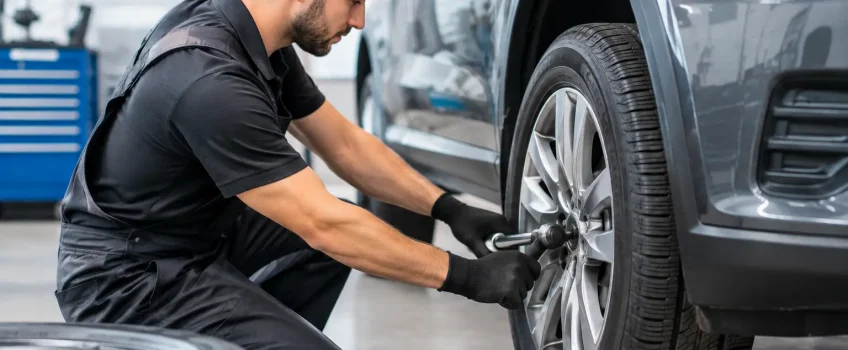
Tyre Fitting Epping NSW for Safer Driving
Your tyres are the only part of your vehicle that touches the road. Whether you are commuting through Epping, doing the school run or heading further across Sydney, professional tyre fitting Epping NSW helps protect the grip, braking and steering control you rely on every day.
A new tyre is not simply fitted and forgotten. The right tyre needs to suit your vehicle, how you drive and the load you carry. It also needs correct fitting, balancing and ongoing pressure checks to deliver the safety and tyre life you expect. Getting those details right can prevent uneven wear, uncomfortable vibration and costly early replacement.
Why proper tyre fitting matters
Tyres work hard in Australian conditions. Heat, wet roads, potholes, kerbs and stop-start traffic all place pressure on the rubber and the structure beneath it. When tyres are worn, damaged or incorrectly fitted, your vehicle can take longer to stop, lose traction more easily in the wet and feel less stable through corners.
Correct fitting begins with confirming the tyre size, load rating and speed rating specified for your vehicle. These details are there for a reason. Fitting a tyre that does not meet the vehicle’s requirements can affect handling, ride quality and safety. It may also create compliance issues if the tyre is not suitable for the vehicle.
The fitting process should also protect the wheel and tyre bead, ensure an effective seal and set the pressure correctly. Once fitted, wheel balancing is essential. Even a small weight difference around a wheel can cause a steering-wheel vibration, often most noticeable at motorway speeds. Left unresolved, vibration can make driving less pleasant and contribute to uneven tyre wear.
Choosing tyres for Epping roads and your driving
There is no single best tyre for every driver. A family SUV used for weekend trips, a small hatchback used for local commuting and a work ute carrying equipment all have different requirements. The most suitable choice depends on the vehicle, your typical distances, road conditions, budget and the balance you want between comfort, grip and tyre life.
Some tyres are designed to provide a quieter, more comfortable ride for regular suburban and motorway driving. Others prioritise wet-weather grip, longer wear or the extra load capacity needed for heavier vehicles. Performance-oriented tyres can offer responsive handling, but they may wear more quickly or create more road noise. A practical recommendation should explain these trade-offs in plain English, rather than pushing the most expensive option.
It is also worth considering whether you are replacing one tyre, two tyres or a full set. Replacing all four can provide the most consistent handling, especially if the existing tyres are well worn. However, replacing a pair may be appropriate when the other two still have safe, even tread and are compatible with the new tyres. On many vehicles, the newer pair should be fitted to the rear axle to help maintain stability in wet conditions, though your mechanic can advise based on your vehicle and tyre condition.
Tyre fitting in Epping NSW includes more than changing tyres
A careful tyre service is an opportunity to check the condition of the wheels and surrounding components. A tyre that repeatedly loses pressure may have a puncture, valve issue, damaged rim or a problem with the tyre itself. A professional inspection can identify whether a repair is safe and suitable, or whether replacement is the better option.
The condition of your old tyres also tells a story. Wear concentrated on one edge can point to wheel alignment concerns. Cupping or scalloped wear can indicate worn suspension components or imbalance. A flat spot may result from heavy braking, while cuts, bulges and exposed cords mean the tyre should not remain in service.
At Epping Auto Service, tyre work can be assessed alongside wheel alignment, balancing, suspension and brake checks. This is useful when a tyre problem is part of a wider issue, rather than an isolated puncture or worn tread. Addressing the cause helps protect your replacement tyres and supports safer driving.
Wheel alignment protects your investment
Wheel alignment is often confused with wheel balancing, but they solve different problems. Balancing corrects weight distribution in the wheel and tyre assembly. Alignment adjusts the angles of the wheels so they meet the road correctly and work together as intended.
A vehicle may need an alignment after hitting a deep pothole, clipping a kerb or replacing steering and suspension parts. You may also notice the car pulling to one side, an off-centre steering wheel or uneven tyre wear. These signs are worth checking promptly. Continuing to drive with poor alignment can wear out a relatively new tyre far sooner than expected.
Not every tyre replacement automatically requires an alignment. If the vehicle drives straight, the steering is centred and the previous tyres have worn evenly, it may not be necessary. But an inspection gives you a clearer answer than guessing, particularly after a road impact or if you have noticed changes in handling.
Signs it is time to check your tyres
Tread depth is the most familiar warning sign, but it is not the only one. Tyres should be inspected if you notice cracks in the sidewall, a bulge, persistent pressure loss, vibration, pulling under braking or a change in how the vehicle feels on wet roads.
You should also check tyre age. Rubber can deteriorate over time, even when tread depth appears acceptable. This can be more common on low-kilometre vehicles, spare tyres, trailers and cars that spend long periods parked outdoors. The date code on the tyre sidewall can help a technician assess its age and condition.
Before a long drive, take a moment to look over each tyre, including the spare where fitted. Check for visible damage, embedded objects and low pressure. Tyre pressures should be checked when the tyres are cold and set according to the vehicle placard, usually found inside the driver’s door opening or fuel flap. The number printed on the tyre sidewall is not normally the recommended everyday pressure.
Small habits that help tyres last
Regular pressure checks are one of the simplest ways to improve tyre life and fuel efficiency. Under-inflated tyres run hotter and wear more heavily on the outer edges. Over-inflation can reduce the contact patch and lead to more wear through the centre of the tread. The right pressure gives the tyre its best chance to perform as designed.
Avoiding kerbs where possible, slowing down for potholes and having tyres rotated at suitable intervals can also help spread wear more evenly. Rotation patterns differ between front-wheel-drive, rear-wheel-drive and all-wheel-drive vehicles, so it is best to follow the vehicle manufacturer’s guidance and seek workshop advice.
When you book tyre fitting, ask for clear advice on the condition of your current tyres, the options that suit your vehicle and whether balancing or alignment is recommended. A few practical checks now can make every trip feel safer, quieter and more confident.