
Brake Vibration Causes and What They Mean
A steering wheel that shudders as you slow for lights on Carlingford Road, or a brake pedal that pulses under your foot, is not something to put off until the next service. Brake vibration causes from worn brake parts to tyre and suspension concerns, and the way the vibration feels can give a mechanic useful clues. More importantly, it can affect your stopping confidence and your vehicle’s safety.
What does brake vibration feel like?
Brake vibration is usually most noticeable when the brake pedal is applied. Some drivers feel a pulsing through the pedal, while others notice the steering wheel shaking, the vehicle body trembling or a judder through the seat. It may happen only at higher speeds, only during firm braking, or every time you slow down.
The location matters. Vibration through the steering wheel often points towards an issue at the front of the vehicle, such as front brake discs, wheels, tyres or suspension components. A shudder felt mainly through the seat or floor can be related to the rear brakes or rear wheel area. That said, modern vehicles have interconnected systems, so a proper inspection is the only way to confirm the cause.
Common brake vibration causes
Uneven brake disc surfaces or thickness variation
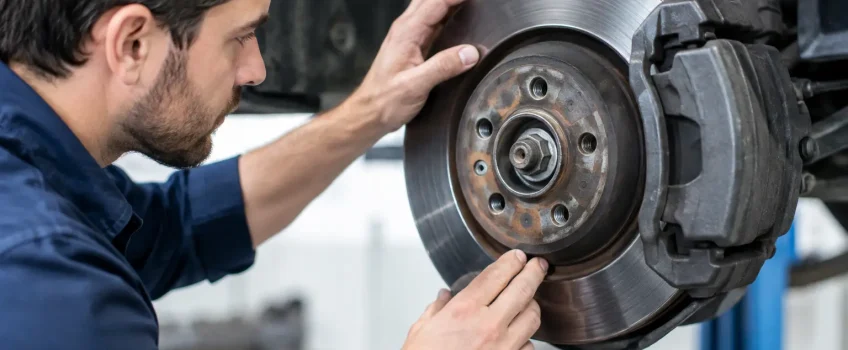
Brake discs need a smooth, even surface for the pads to grip consistently. Over time, heat, wear and uneven material transfer from the brake pads can create slight differences across the disc surface. As the disc rotates through the pads, those differences can create the familiar pulse in the pedal or shake through the steering wheel.
People often describe this as “warped discs”. While severe overheating can damage a disc, brake vibration is frequently caused by disc thickness variation or uneven pad deposits rather than a disc simply bending out of shape. The repair may involve replacing the discs and pads together, or, where appropriate and within manufacturer specifications, machining the discs. A mechanic will measure the parts before recommending the right option.
Repeated hard braking, towing, long downhill driving and stopping with very hot brakes held firmly on can all contribute. In Sydney traffic, constant stop-start driving can also place plenty of heat cycles through the braking system.
Worn, glazed or contaminated brake pads
Brake pads gradually wear down as part of normal driving. Once they are worn unevenly, hardened from excessive heat, or contaminated by grease, brake fluid or another substance, they may not grip the disc evenly. This can lead to vibration, noise, reduced braking performance or a pulling sensation.
Glazed pads can have a shiny, hardened surface after overheating. You may notice a squeal or a less responsive pedal alongside the vibration. Replacing pads without checking the discs, calipers and mounting hardware can leave the underlying issue unresolved, which is why a full brake inspection matters.
Sticking brake calipers or seized slide pins
A brake caliper applies pressure to the pads. On many vehicles, the caliper needs to move freely on slide pins so both pads contact the disc correctly. If a caliper piston sticks or the slide pins seize, one pad can stay in contact with the disc after you release the pedal.
This creates excess heat and uneven wear. It can cause vibration during braking, a burning smell after a drive, a vehicle that pulls to one side, poor fuel economy or one wheel that feels unusually hot. This concern needs prompt attention because a dragging brake can quickly damage pads, discs and other components.
Loose or worn suspension and steering parts
Not every shake felt while braking begins in the brakes themselves. Worn control arm bushes, ball joints, tie rod ends, wheel bearings or steering components can allow the wheel to move more than it should when braking force is applied. The result may be steering wheel shudder, wandering, clunks over bumps or uneven tyre wear.
These parts help keep your tyres in firm contact with the road. If they have excessive play, fitting new brake discs alone may not cure the vibration. A careful road test and inspection help identify whether the brake system, suspension or both are contributing.
Tyre, wheel alignment or wheel balance problems
A tyre with uneven wear, a damaged wheel, incorrect wheel balance or poor alignment can make a vehicle vibrate even when you are not braking. Braking may simply make an existing problem more noticeable as weight transfers forward.
If the vibration begins at a particular speed while cruising and continues when you take your foot off the brake, tyres and wheels should be checked. A vibration that appears only when braking is more likely to involve brake or suspension components, but there can be overlap. Tyres should also be inspected for bulges, cuts and low tread, as these are safety issues in their own right.
Incorrect wheel nut tension
Wheel nuts must be tightened evenly and to the manufacturer’s specified torque. Uneven or excessive tightening can place stress on a brake disc and may contribute to braking vibration. Loose wheel nuts are more serious again and require immediate attention.
This is one reason wheel fitment should never be rushed. After tyre work, repairs or a puncture change, correct wheel installation is essential for safe driving.
When brake vibration needs urgent attention
Any new brake vibration deserves a booking soon, but some symptoms should not wait. Avoid driving the vehicle if the vibration is severe, braking power feels reduced, the car pulls sharply to one side, there is a grinding noise, smoke or a burning smell, or a brake warning light is on. Arrange assistance rather than attempting to drive it to a workshop.
A soft pedal, pedal that sinks towards the floor, or a sudden change in how far the vehicle takes to stop is also urgent. These symptoms may indicate a hydraulic brake issue rather than disc or pad vibration, and they need immediate professional assessment.
What a professional brake inspection involves
A proper diagnosis is more than a quick look through the wheel spokes. A licensed mechanic may road test the vehicle, check the pedal feel and inspect the brake discs, pads, calipers, hoses and fluid condition. They will also assess tyre wear, wheel condition, wheel bearings, steering and suspension components where required.
Brake disc thickness and run-out can be measured against manufacturer limits. The technician can look for heat damage, uneven pad wear, seized caliper components and leaks. This process avoids replacing parts based on guesswork and helps ensure the repair addresses the actual cause of the shudder.
At Epping Auto Service, the focus is on explaining what has been found in plain English, outlining the repair options and helping you make a safe, practical decision for your vehicle.
Can you keep driving with vibrating brakes?
It depends on the severity and the cause, but treating vibration as normal is rarely a good idea. Mild pedal pulsation may not mean your brakes will fail immediately, yet it can worsen over time and may hide worn or damaged components. Continued driving can also turn a relatively straightforward pad and disc repair into a more involved caliper, tyre or suspension job.
There is also the human side of it. A vehicle that shakes when you brake is unsettling, especially with children in the car, in wet weather or during a busy commute. Reliable brakes should feel smooth, predictable and controlled every time you press the pedal.
If your car is shuddering when you slow down, arrange a brake check before your next long trip or period of heavy driving. A timely inspection can restore smooth braking and give you confidence each time you head out on the road.