
Car Air Conditioning Regas Epping Explained
A Sydney summer commute is hard enough without warm air blowing through the vents. If you are searching for a car air conditioning regas Epping service, the key question is not simply whether your system needs more refrigerant. It is why the air conditioning has stopped cooling as it should.
A proper air conditioning service looks beyond a quick top-up. It checks how the system is performing, identifies obvious leaks or component faults, and makes sure the refrigerant is handled correctly. That approach helps you spend money on the repair your vehicle actually needs, rather than paying for cold air that disappears again a few weeks later.
When does your car need an air conditioning regas?
Your air conditioner may still blow air strongly but fail to lower the cabin temperature. That is one of the most common signs that refrigerant levels are low. Refrigerant is the gas that carries heat out of the cabin, so when there is not enough in the system, the fan can feel normal while the air remains only mildly cool or completely warm.
Other warning signs can include air that starts cold then warms up, cooling that is noticeably weaker at idle, a musty smell when the system is running, or unusual clicking and rattling when the air conditioner is switched on. A puddle of clear water under the vehicle after using the air conditioner is usually normal condensation. Oily residue around air conditioning hoses or fittings, however, can point to a refrigerant leak and should be checked.
It is also worth booking an inspection if your car has not had its air conditioning used regularly. The system’s seals and compressor benefit from occasional operation, including during cooler months. Running the air conditioner for a short period every week or two can help keep it in working order.
Why a regas is not always the whole answer
Car air conditioning is a closed system. Refrigerant does not get used up like fuel, so a system that has lost enough gas to stop cooling may have a leak. Very small losses can occur gradually over time, particularly in older vehicles, but a sudden loss of cooling deserves proper diagnosis.
A regas can restore performance when the system is low and otherwise sound. If there is a damaged hose, leaking seal, faulty condenser, failed compressor, blocked cabin filter or electrical fault, though, adding refrigerant alone will not solve the underlying problem. In some cases, it may only provide temporary relief.
This is why a reputable workshop will assess the system before recommending work. The right repair depends on the vehicle, its age, the refrigerant type it uses and the cause of the fault. A simple service may be all that is required. At other times, fixing a leak or replacing a component first is the safer and more cost-effective option.
The difference between a weak fan and weak cooling
Not every air conditioning complaint is a refrigerant issue. If very little air comes through the vents, even at a high fan setting, the problem may be a blocked cabin pollen filter, a blower motor fault or an issue within the ventilation system. If plenty of air is coming through but it is not cold, the refrigerant circuit, compressor or condenser may need attention.
That distinction matters because it prevents guesswork. Clear information about what you have noticed – whether the issue happens all the time, only in traffic, or after the vehicle has been parked in the sun – can help a technician diagnose the fault more efficiently.
What happens during a car air conditioning regas in Epping?
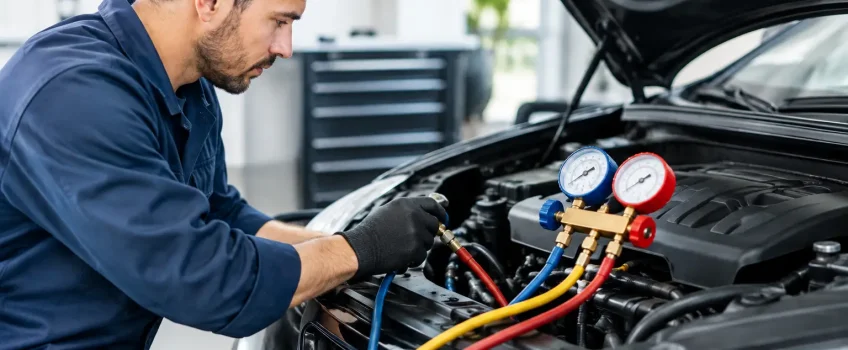
A professional air conditioning appointment should begin with checks rather than an automatic refill. The technician will inspect the visible components and connections, assess the cooling performance, and test the system’s pressures. These checks can reveal whether the system is operating within its expected range and whether there are signs of a larger issue.
If a regas is suitable, the old refrigerant is recovered using approved equipment. The system may then be placed under vacuum to remove air and moisture before it is refilled with the correct type and specified quantity of refrigerant for your vehicle. The technician can then test the air conditioning again to confirm it is cooling properly.
Modern vehicles may use different refrigerants from older cars, and the amount required is specific to the make and model. Using the incorrect refrigerant or adding too much can affect performance and potentially damage components. Refrigerant work should be performed by appropriately licenced professionals with the right equipment.
At Epping Auto Service, air conditioning concerns can be assessed alongside other mechanical and auto-electrical issues. This is particularly useful when poor cooling is connected to a faulty cooling fan, drive belt, electrical control or another related component rather than low refrigerant alone.
How long should a car air conditioner stay cold?
There is no fixed schedule that suits every vehicle. Some cars can go years without requiring a regas, while an older vehicle with a slow leak may need attention sooner. The best guide is performance: if the air conditioner no longer cools effectively, takes too long to cool the cabin or behaves inconsistently, arrange an inspection.
Rather than booking a regas every year as routine maintenance, have the system checked when there is a noticeable change. Regular servicing of the vehicle as a whole also gives a workshop the chance to spot worn belts, damaged hoses and cooling-system concerns before they become more disruptive.
For drivers who spend long periods on the road, including families, commuters and fleet operators, reliable cabin cooling is more than a comfort feature. It helps reduce fatigue during hot weather and clears mist from the windscreen in wet or humid conditions. Your air conditioner works with the demister to improve visibility, so a fault can affect safety as well as comfort.
Simple ways to help your air conditioning work better
A regas will not overcome heat entering the cabin through hot glass, a blocked filter or poor airflow. A few everyday habits can help the system perform well and reduce strain on it.
- Use a windscreen sunshade when your car is parked in direct sun, especially during summer.
- Open the doors or windows briefly to let trapped heat escape before relying on the air conditioner.
- Select recirculation once the cabin begins cooling, provided the windows are clear, to avoid continually cooling hot outside air.
- Replace the cabin filter when recommended or when airflow and air quality decline.
- Run the air conditioner regularly throughout the year, not only on the hottest days.
If the car has been sitting in full sun, give it a minute or two with the windows open before setting the climate control to a comfortable temperature. Starting at maximum cold is not always the fastest way to cool a heat-soaked cabin. The system needs airflow and time to remove the stored heat from the seats, dash and interior surfaces.
When to book an inspection sooner
Do not wait for the next hot day if the air conditioning has stopped working completely, the compressor makes persistent noise, there is a burning smell, or the vehicle is overheating. Air conditioning components can share space and connections with other important systems, and an unusual noise or overheating concern needs prompt mechanical attention.
Likewise, avoid do-it-yourself refrigerant cans and sealants. They can introduce the wrong amount of refrigerant, mask a leak without repairing it, or contaminate equipment used to service the system. A correct diagnosis may cost less in the long run than repeating temporary fixes.
Cold, clean air through the vents makes every school run, work commute and weekend trip easier. If your vehicle is taking too long to cool or is no longer keeping the cabin comfortable, a professional inspection can give you a clear answer and help you get back on the road feeling comfortable and confident.