
Vehicle Registration Inspection Guide for NSW
A registration renewal can feel straightforward until the reminder arrives and your vehicle needs an inspection first. This vehicle registration inspection guide explains what NSW drivers need to know about pink slips and blue slips, what is checked, and how to avoid preventable delays.
For most vehicles, the goal is simple: confirm the car is safe for use on the road. It is not a test of whether your car looks brand new or has every optional feature working perfectly. Inspectors focus on the parts that affect safety, identification and compliance – the components that help protect you, your passengers and everyone else sharing the road.
When do you need a registration inspection in NSW?
In NSW, many light vehicles more than five years old need an annual eSafety inspection before registration can be renewed. This is commonly called a pink slip. Once the vehicle passes, the result is submitted electronically, so there is usually no paper certificate to take to Service NSW.
A blue slip is different. It is a more detailed identity and safety inspection, generally needed when a vehicle is unregistered, has come from interstate, has been issued a defect notice, has had major repairs, or requires identity verification for another reason. Blue slips are completed at an Authorised Unregistered Vehicle Inspection Scheme station.
The right inspection depends on your vehicle’s registration status and history. If you are unsure whether you need a pink slip or blue slip, checking before booking can save a second trip to the workshop.
Vehicle registration inspection guide: what gets checked
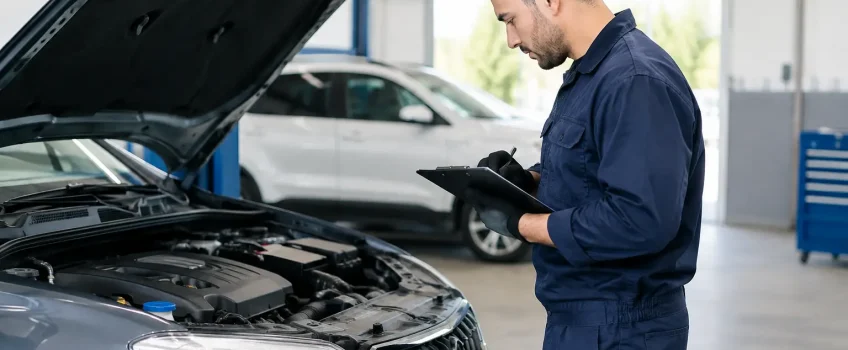
An inspection is a practical safety assessment carried out by an authorised inspector. Requirements vary slightly according to vehicle type and circumstances, but the inspection commonly covers the areas below.
Tyres, wheels and suspension
Tyres must have sufficient legal tread depth and be in safe condition. Inspectors will look for exposed cords, major cracking, bulges, damage and tyres that rub against the body or suspension. Tyres also need to be correctly matched and suitable for the vehicle.
Wheels, steering and suspension are checked because they directly affect control. Worn suspension components, excessive steering play, damaged wheel bearings and leaking shock absorbers can all create safety concerns. A car that pulls sharply, wanders on the road or knocks over bumps is worth having checked before the inspection date.
Brakes and lights
Your braking system needs to operate effectively and evenly. The inspection may identify worn brake pads, damaged discs, leaks, faulty brake hoses, an illuminated brake warning light or a handbrake that does not hold properly.
Lights are one of the easiest areas for owners to check at home. Headlights, tail-lights, brake lights, indicators, number-plate lights and reverse lights must operate as required. Ask someone to stand behind the vehicle while you press the brake pedal, or use reflections in a garage door to check the rear lights. A blown globe is a small repair, but it can still hold up a pass.
Windscreen, wipers and driver visibility
Drivers need a clear view of the road. A cracked windscreen may be an issue if the damage is in the driver’s critical viewing area or affects the glass’s structural integrity. Wiper blades should clear the screen effectively, and washers need to work where fitted.
Do not ignore a wiper that smears badly in dry weather. Sydney rain can arrive quickly, and poor visibility is more than an inspection problem – it is a real safety risk.
Seatbelts, seats and doors
Seatbelts must latch, retract and remain securely mounted. Frayed webbing, damaged buckles and warning lights that stay on can require repair. Seats need to be firmly secured, particularly the driver’s seat, while doors, bonnet and boot should latch safely.
If you have child seats fitted, keep in mind that the vehicle’s seatbelts and anchorage points still need to be accessible enough for inspection. It can help to mention any fittings to the workshop when you arrive.
Exhaust, emissions and leaks
Inspectors look for exhaust damage, excessive smoke, unsafe noise levels and leaks that may affect vehicle safety or the environment. Warning lights on the dashboard, particularly the engine warning light, can also indicate a fault that should be diagnosed before inspection.
A small oil seep does not always mean an automatic failure. The concern is usually an active or excessive leak, especially if fluid is likely to drip onto the road, brakes or exhaust. This is one area where a proper assessment matters more than guessing from a spot on the driveway.
Vehicle identification and general condition
For a blue slip, vehicle identity is a major part of the process. The vehicle identification number, engine number where applicable, registration details and compliance information must be accurate and readable. The inspector may also assess repairs, modifications and the overall condition of the vehicle more closely.
Modifications are not automatically a problem, but they must be legal and appropriate for the vehicle. Non-standard wheels, suspension lifts, tinted windows, engine changes and body alterations can all need additional consideration. If your vehicle has been modified, raise it when booking rather than finding out on the day that further documentation is needed.
How to prepare before your appointment
A quick check before you leave home can make the appointment smoother. Make sure the vehicle is reasonably clean, especially around number plates and identification areas, and remove heavy items that block access to the boot or cabin. Bring any documents requested for your type of inspection, particularly for an unregistered or interstate vehicle.
Take five minutes to test the lights, horn, wipers, washers and seatbelts. Check tyre pressures and look over the tyres for obvious damage. If a dashboard warning light has been on for days or weeks, arrange a diagnostic check first. Clearing a warning light without fixing the underlying fault is not a safe solution and may simply lead to the issue returning.
It is also wise to book ahead rather than leaving your inspection until the final day before registration expires. If repairs are needed, you will have time to organise them without rushing decisions or risking time off the road.
What happens if the vehicle does not pass?
A failed inspection does not mean your car is beyond repair. It means the inspector has found one or more items that need attention before the vehicle can meet the required standard. You should receive clear information about the issues identified and what needs to be rectified.
Some repairs are quick, such as replacing bulbs, wiper blades or worn tyres. Others may need more time, including brake work, suspension repairs, windscreen replacement or diagnosing an engine warning light. The best approach is to deal with the stated issue properly, then return for a reinspection within the permitted timeframe.
Be cautious about treating an inspection as a once-a-year maintenance plan. A pink slip checks safety at a point in time, but regular servicing helps catch wear before it becomes urgent. This matters especially for commuters, family vehicles and fleet cars that cover plenty of kilometres around Epping and greater Sydney.
Choosing an inspection station
Choose an authorised inspection station that can explain the result in plain English and, where needed, carry out repairs without sending you between multiple providers. A workshop that knows your vehicle’s servicing history can often identify developing problems earlier and help you plan repairs around your budget and schedule.
At Epping Auto Service, authorised inspections can be combined with mechanical repairs, diagnostics and routine maintenance where required. That means you can have concerns checked by licensed mechanics and get practical advice on what needs immediate attention versus what can be monitored at a future service.
A registration inspection is one useful checkpoint, not a reason to wait for a warning light or breakdown. Keeping an eye on tyres, brakes, lights and servicing throughout the year gives you a better chance of arriving at your next inspection confident that your vehicle is ready for the road.